
Regenerative Skin Therapies in Jaipur: Cellular Rejuvenation, Collagen Biostimulation, and Dermal Remodeling
Dermatologist-led PRP, GFC, and Exosome treatments for glowing, younger-looking skin. Cellular rejuvenation and collagen biostimulation for Indian skin types. Supervised directly by Senior Dermatologists Dr. U.S. Agarwal (Ex. Principal SMS Medical College) & Dr. Puneet Agarwal (Associate Professor, SMS Hospital).
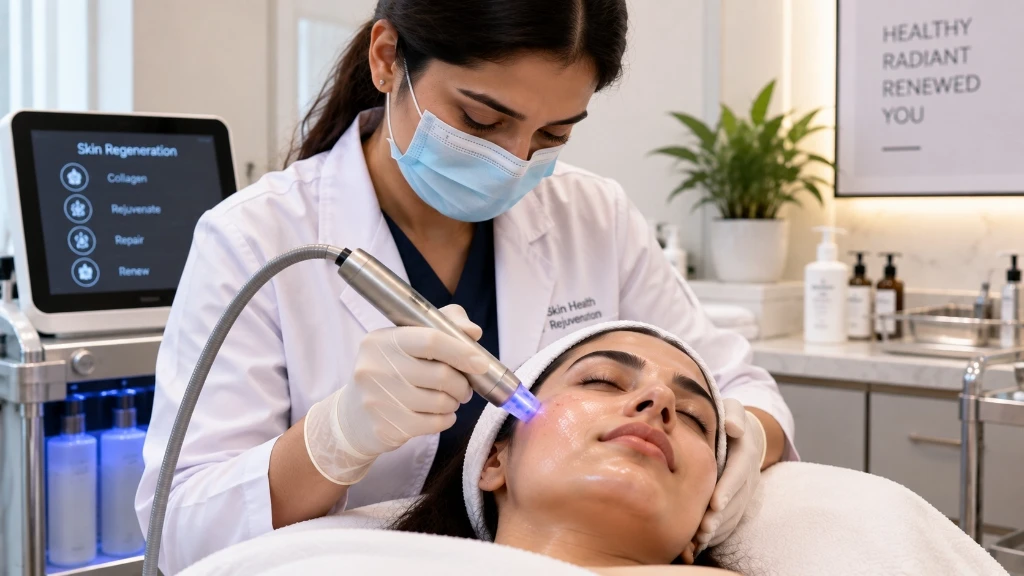
Quick Facts: Skin Regenerative Therapy in Jaipur
US-FDA VerifiedBest Skin Regenerative Therapy in Jaipur: Help Your Skin Repair and Renew Itself
If you are looking for the best skin regenerative therapy in Jaipur, chances are you have already tried creams, serums and facials that promised a lot and delivered little. Regenerative therapies take a different approach. Instead of covering up dullness, fine lines, scars or uneven texture, they work directly with your skin's own repair systems to help it look healthier, firmer and more radiant from within.
Aging skin is not merely a cosmetic concern; it is the visible biological outcome of progressive cellular exhaustion, extracellular matrix (ECM) degradation, and environmental insult. Traditional aesthetic treatments historically focused on camouflage—temporarily filling hollows with synthetic gels or paralyzing muscles to mask dynamic lines.
Modern clinical dermatology has shifted toward regenerative aesthetics: therapies designed to reprogram senescent cells, stimulate endogenous neocollagenesis, restore structural micro-architecture, and rebuild the compromised skin barrier from within.
At Sundaram Jaipur Laser Clinic, regenerative skin therapies are planned and executed under the direct supervision of board-certified dermatologists. Combining medical-grade delivery platforms with advanced biological signaling molecules—such as Polynucleotides (PNs/PDRN), Exosomes, Autologous Growth Factors (PRP/GFC), and Collagen Biostimulators—we address the root causes of skin aging and environmental breakdown specifically tailored for Indian skin types.
What Is Skin Regenerative Therapy?
Skin regenerative therapy is a group of treatments designed to stimulate the skin's natural healing and renewal processes. As we age, or after sun damage, acne, stress, and pollution, our skin produces less collagen and repairs itself more slowly. Regenerative treatments use biological signals to encourage the skin to rebuild its cellular foundation.
Meet Your Dermatologists
Regenerative treatment is a clinical medical procedure, and who plans and executes it matters.
Dr. U.S. Agarwal
Ex-Principal & Senior Professor, SMS Medical College, Jaipur
Decades of academic, clinical, and teaching leadership. Known for a meticulous, safety-first diagnostic approach to every regenerative and anti-aging protocol.
Dr. Puneet Agarwal
Associate Professor, SMS Hospital, Jaipur
Combines rigorous academic research with hands-on practice in skin, lasers, and regenerative aesthetics—keeping clinical protocols aligned with global medical standards.
If you are searching for the best skin rejuvenation doctors in Jaipur, look for qualified medical specialists who examine your skin biology first and recommend treatment second.
The Pathophysiology of Skin Damage: Why Skin Loses Its Youth
The human skin endures continuous extrinsic and intrinsic stress. Over time, these stressors initiate a cascade of molecular and structural degeneration across both the epidermal and dermal compartments:
[Epidermal Collapse]
- Stratum Corneum Thinning: Slower keratinocyte turnover leads to fragile surface.
- Depletion of Ceramides & Lipids: Intercellular lipid matrix dissolves.
- Elevated TEWL: Transepidermal Water Loss triggers dehydration & irritation.
- Melanocytic Hyperactivity: Dysregulated melanin produces stubborn Melasma & PIH.
[Dermal Disorganization]
- AP-1 & NF-κB Activation: Pro-inflammatory signaling cascades ignite tissue breakdown.
- Upregulation of MMPs (MMP-1, MMP-3): Collagenase enzymes systematically slice collagen.
- Cleavage of Type I & III Collagen: Dermal scaffolding dissolves into brittle fragments.
- Elastin Clump Fragmentation: Solar elastosis replaces bouncy recoil with crepey laxity.
1. The Primary Aggressors in Detail
UVA (320–400 nm) penetrates into the deep reticular dermis, generating ROS that mutate fibroblast DNA. UVB (290–320 nm) attacks epidermal keratinocytes, inducing cellular senescence.
Urban particulate matter carries polycyclic aromatic hydrocarbons (PAHs) that penetrate transcutaneously, activating aryl hydrocarbon receptors (AhR) and causing chronic inflammaging.
Unpaired electrons strip stability from cell lipid membranes, accelerating mitochondrial dysfunction and converting energetic fibroblasts into dormant senescent cells.
Nicotine induces acute vasoconstriction of terminal dermal capillaries, starving tissue of oxygen and vital micronutrients while actively upregulating collagen-degrading enzymes.
Diets high in refined sugars form Advanced Glycation End-products (AGEs), which cross-link supple collagen fibers into brittle, non-compliant matrices that cannot recoil or repair.
2. The Resulting Structural Degeneration
Fragmentation of Type I & III Collagen
Healthy skin is ~80% Type I and ~15% Type III collagen bundles. Activated Matrix Metalloproteinases (MMPs) slice these proteins into fragments, collapsing tensile strength into hollows and folds.
Degradation of Elastin (Solar Elastosis)
Intact elastin coils yield youthful springiness. Chronic UV exposure replaces linear fibers with disorganized amorphous clumps, leaving crepey skin laxity that crinkles under tension.
Epidermal Thinning & Barrier Failure
As basal turnover slows, the stratum corneum dehydrates. Ceramides, cholesterol, and fatty acids drop, causing high Transepidermal Water Loss (TEWL), heightened sensitivity, and dull light scattering.
Natural Photoprotection and Dermal Defense: The Clinical Foundation
Before pursuing in-clinic procedures, patients must establish a protective biological baseline. In-clinic regenerative therapies stimulate cell signaling, but daily lifestyle habits protect newly synthesized collagen from premature enzymatic destruction.
| Lifestyle Pillar | Biological Action on Skin Tissue |
|---|---|
| Broad-Spectrum Sunscreen | Neutralizes UV photons; prevents MMP-mediated collagen loss and UV-induced DNA thymine dimers. |
| Antioxidant Nutrition | Quenches free radicals; supplies essential amino acid substrates (proline, lysine) for collagen assembly. |
| Smoking Cessation | Reverses peripheral capillary vasoconstriction; restores terminal microvascular perfusion and oxygenation. |
| Cardiovascular Exercise | Increases cutaneous blood flow; triggers cellular autophagy to clear damaged cellular debris. |
| Circadian Sleep Hygiene | Maximizes nighttime cellular DNA repair and pulsatile Growth Hormone (HGH) release while lowering cortisol. |
1. Medical-Grade Photoprotection
Sunscreen is non-negotiable. Patients should use a broad-spectrum sunscreen with an SPF of 50 or higher and a PA++++ rating. Incorporating iron oxides guards against high-energy visible (HEV) blue light, which triggers persistent hyperpigmentation in melanin-dense Indian skin. Reapply every 2 to 3 hours during daylight exposure.
2. The Dermal Repair Diet
- Polyphenols & Carotenoids: Lycopene (cooked tomatoes), astaxanthin, green tea EGCG, and resveratrol neutralize radicals before they mutate DNA.
- Vitamin C (Ascorbic Acid): Essential cofactor for lysyl and prolyl hydroxylase enzymes to stabilize triple-helix collagen.
- Omega-3 Essential Fatty Acids: Flaxseeds, chia seeds, and walnuts restore intercellular lipids, curbing TEWL.
3. Smoking Cessation & Vascular Recovery
Halting nicotine consumption reverses microvascular spasms, restoring oxygen, glucose, and amino acid delivery to healing tissues. Within weeks, capillary blood flow recovers, dramatically improving skin brightness, natural healing capacity, and procedural outcomes.
4. Aerobic Exercise & Cellular Autophagy
Cardiovascular exercise drives nutrient-dense blood into peripheral dermal capillaries. Elevated metabolic turnover upregulates autophagy—the internal cellular "clean-up" mechanism that breaks down and recycles damaged proteins and dysfunctional mitochondria.
5. Circadian Sleep Restoration & HGH Release
During deep non-REM stage sleep, peak pulses of human growth hormone (HGH) activate cellular mitosis and DNA repair enzymes, while systemic cortisol levels drop, allowing inflammatory pathways to settle. Consistent 7 to 8 hours of restorative sleep directly translates into enhanced skin elasticity and procedural responsiveness.
Clinical Regenerative Procedures at Jaipur Laser Clinic
When biological defense is established, clinical procedures are deployed to repair established tissue damage. Each intervention works through distinct molecular pathways to initiate true cellular rejuvenation:
Microneedling (CIT) & HA Infusion
Creates precision micro-channels to initiate the wound-healing cascade while driving non-crosslinked hyaluronic acid into the papillary dermis.
Autologous PRP / GFC & Exosomes
Deploys concentrated growth factors and nanoscale messenger vesicles carrying mRNA and cytokines to reboot senescent cells.
PDRN / Polynucleotides & Biostimulators
Supplies purified DNA fragments for the purine salvage pathway and micro-particles (PLLA/CaHA) for long-term de novo neocollagenesis.
1. Medical Microneedling (Collagen Induction Therapy - CIT)
Calibrated Depth: 0.5 mm to 2.5 mmWhat It Is: An automated medical procedure using oscillating surgical micro-needles to create thousands of micro-punctures at precise, calibrated depths.
How It Works: Mechanical micro-trauma triggers the wound-healing cascade without thermal ablation. Platelets release transforming growth factor-beta (TGF-β) and connective tissue growth factor (CTGF), driving fibroblasts to replace disorganized scar tissue with an organized mesh of Type III and Type I collagen.
2. Pure Hyaluronic Acid (HA) Infusion via Microneedling
Dual Molecular Weight DeliveryWhat It Is: The direct transdermal delivery of non-crosslinked, high-purity, low-and-high-molecular-weight hyaluronic acid into open micro-channels created by microneedling.
How It Works: Rather than sitting atop the stratum corneum, pure HA is driven directly into the papillary dermis. High-molecular HA binds up to 1,000 times its molecular weight in water to restore volume, while low-molecular HA fragments stimulate cell receptors (CD44) to jump-start cellular repair.
3. Autologous PRP & Acellular GFC (Growth Factor Concentrate)
Autologous BiologicsWhat It Is: Biological therapies derived from the patient's own blood. PRP isolates concentrated, living platelets; GFC takes this further by pre-activating the platelets in specialized collection tubes to yield a cell-free, non-inflammatory harvest of pure growth factors.
How It Works: Infused growth factors—including Platelet-Derived Growth Factor (PDGF), Vascular Endothelial Growth Factor (VEGF), and Epidermal Growth Factor (EGF)—bind to receptors on target fibroblasts and endothelial cells, accelerating micro-capillary angiogenesis and tissue remodeling.
4. Stem Cell-Derived Exosomes
Nanoscale Signaling Vesicles (30–150 nm)What It Is: Nanoscale extracellular vesicles (30–150 nm) isolated from purified mesenchymal stem cells, carrying high concentrations of messenger RNA (mRNA), microRNA (miRNA), peptides, and signaling cytokines.
How It Works: Exosomes act as biological couriers that fuse with recipient fibroblast and keratinocyte membranes. They transfer genetic and paracrine instructions that downregulate pro-inflammatory cytokines (e.g., TNF-α, IL-6), protect against oxidative stress, and stimulate dormant dermal fibroblasts into an active, youth-like secretory state.
5. Polynucleotides (PN) and PDRN (Polydeoxyribonucleotide)
Salmon DNA Bio-HomologyWhat It Is: Highly purified, biocompatible biological polymers derived from salmon gonad DNA (selected for its high structural homology with human DNA).
1. Adenosine A2A Receptor Agonism: Selectively activates cell-surface A2A receptors, suppressing inflammatory NF-κB pathways, upregulating VEGF for angiogenesis, and reducing the secretion of collagen-destroying MMP-1.
2. The Purine Salvage Pathway: Provides ready-to-use purine and pyrimidine building blocks directly to cells, allowing damaged DNA to self-repair efficiently without expending high metabolic energy.
Collagen in Skin Restoration: Oral, Topical, and Biostimulators
Collagen is the primary structural scaffolding of the skin. Rebuilding it requires an understanding of molecular scale, biochemical pathways, and delivery methods:
| Delivery Method | Molecular Profile / Depth | Primary Clinical Role |
|---|---|---|
| Topical Collagen | High molecular weight (>300 kDa) | Superficial humectant; hydrates surface only. Cannot penetrate dermis. |
| Oral Hydrolyzed Collagen | Low molecular weight (<3 kDa) | Systemic signaling; supplies bioavailable dipeptides to stimulate fibroblasts. |
| Injectable Biostimulators | Microparticles in deep subdermis | De novo neocollagenesis; permanent native collagen scaffolding. |
1. The Reality of Topical Collagen: The 500-Dalton Rule
Unprocessed native collagen has a massive molecular weight exceeding 300,000 Daltons. Because human skin has a strict molecular absorption threshold of roughly 500 Daltons (the 500-Dalton Rule), topical collagen creams cannot cross the stratum corneum to integrate into the dermis. Instead, they act as effective surface film-formers and humectants—softening the outermost layer and reducing surface dryness, but completely unable to stimulate structural remodeling.
2. The Science of Oral Hydrolyzed Collagen Peptides
Unlike topicals, hydrolyzed collagen peptides are enzymatically processed into bioavailable di-peptides and tri-peptides (predominantly Proline-Hydroxyproline [Pro-Hyp] and Glycine-Proline-Hydroxyproline [Gly-Pro-Hyp]) with molecular weights below 3,000 Daltons:
Upon intestinal absorption, these peptides bind to fibroblast surface receptors, mimicking the degradation of native tissue. This sends a biological "false signal" that collagen breakdown is occurring, prompting fibroblasts to ramp up the synthesis of fresh endogenous collagen, elastin, and hyaluronic acid.
Supplies the direct amino acid pool required by prolyl and lysyl hydroxylase enzymes to assemble stable tropocollagen triple helices.
3. Injectable Collagen Biostimulators (PLLA, CaHA, PCL)
Collagen biostimulators are advanced, biocompatible injectables placed into the subdermal or supraperiosteal plane. Rather than merely occupying space like traditional hyaluronic acid gels, they act as catalysts for long-term de novo neocollagenesis:
PLLA or CaHA placed in subdermal plane
Sub-clinical, pro-healing immune reaction
Cells scaffold around biodegradable microspheres
Type III remodeled into resilient Type I bundles
Biodegradable micro-particles stimulate fibroblasts over 3 to 6 months. As PLLA degrades into water and CO2, a permanent framework of natural collagen remains.
Smooth microspheres in a CMC carrier gel. Provides immediate gentle contour lift while stimulating strong transition from Type III to resilient Type I collagen.
A long-chain biodegradable polymer delivering sustained, continuous neocollagenesis over extended clinical intervals (1 to 2+ years).
Procedural Comparison: Selecting the Right Regenerative Protocol
Every patient's skin biology presents unique requirements. Here is how our senior dermatologists match procedures to specific indications and tissue depths:
| Procedure | Primary Indication | Target Dermal Layer | Downtime | Expected Onset |
|---|---|---|---|---|
| Microneedling + HA | Dryness, rough texture, fine lines | Epidermis & Papillary Dermis | 24–48 hours | 5–7 days |
| PRP / GFC Therapy | Early laxity, dullness, dark circles | Papillary & Reticular Dermis | 24 hours | 3–4 weeks |
| Exosome Infusion | Inflammation, barrier damage, aging | Cellular Microenvironment | 12–24 hours | 2–3 weeks |
| Polynucleotides (PN/PDRN) | Crepey under-eyes, thin neck skin | Upper to Mid Dermis | 24–48 hours | 2–4 weeks |
| Collagen Biostimulators | Deep volume loss, structural sagging | Deep Subdermal / Supraperiosteal | 1–3 days | 8–12 weeks (peaks at 6 mos) |
Benefits of Skin Regenerative Therapy
Depending on your skin diagnosis and selected biologic modality, benefits include:
Smoother Skin Texture
Smoother, softer, and visibly more uniform surface by replenishing dermal hydration and collagen.
Luminous Natural Glow
A fresher, brighter complexion resulting from stimulated micro-capillary angiogenesis and oxygenation.
Softened Fine Lines
Gradual biological plumping of periorbital crow's feet, crinkly smile lines, and neck bands.
Firmness & Elasticity
Restores youthful bounce and rebound recoil by stimulating endogenous Type I collagen and elastin.
Acne Scar Remodeling
Gradual volumetric filling and structural normalization of rolling, boxcar, and shallow acne scars.
Refined Pores & Tone
Tightens collagen around follicular openings, reducing open pore diameters and unifying skin tone.
100% Natural Results
No puffy "pillow face," frozen muscles, or artificial overdone contours. Only your own renewed cells.
Minimal Downtime
Most patients return to regular professional and personal routines within 12 to 24 hours.
Your Treatment Journey: What to Expect
At Jaipur Laser Clinic, we follow a transparent, dermatologist-supervised 6-step medical process:
Consultation & Skin Analysis
We review your skin under medical magnification, discuss concerns, lifestyle, medical history, and aesthetic goals.
Personalised Plan
Our dermatologists recommend the exact biologic therapy, combination protocols, number of sessions, and timing suited to your skin.
Preparation & Numbing
Skin is thoroughly cleansed with antiseptic solutions, and a medical-grade topical numbing cream is applied for 30–45 mins.
Clinical Treatment
For PRP/GFC, blood is harvested and centrifuged. Biologics (Exosomes/PDRN/GFC) are precisely infused using sterile single-use kits.
Aftercare Guidance
You receive clear instructions on gentle barrier cleansing, sun protection (SPF 50+), and active ingredient avoidance for 48 hours.
Follow-Up & Assessment
Progress is documented with clinical photography at 4-week intervals, allowing fine adjustments to your maintenance protocol.
Why Choose Sundaram Jaipur Laser Clinic?
Patients choose our clinic in Jaipur for our clinical ethics, academic background, and unmatched safety standards:
Senior Dermatologist-Led Care
Supervised directly by Dr. U.S. Agarwal (Ex-Principal, SMS Medical College) and Dr. Puneet Agarwal (Associate Professor, SMS Hospital).
Skin-First Medical Philosophy
Every procedure is selected strictly after a comprehensive diagnostic skin assessment, never pushed as an arbitrary commercial package.
Expertise in Indian Skin (Types III–V)
Specialized knowledge of melanin-rich skin behavior prevents post-inflammatory hyperpigmentation (PIH) and optimizes safety.
Clean, Private & Sterile Clinic
Single-use disposable needles, sterile centrifugation kits, and strict medical sterilization protocols ensure total patient peace of mind.
100% Transparent Communication
Complete clarity regarding expected session numbers, realistic timelines, maintenance intervals, and all-inclusive pricing.
Honest Clinical Expectations
We provide evidence-based, medically realistic projections. No false overnight miracles or misleading marketing claims.
Book Your Skin Regenerative Therapy Consultation in Jaipur
Healthy, glowing, and resilient skin starts with the right biological plan. Let our senior dermatologists examine your skin and recommend what will genuinely help.
Transparent Treatment Pricing Breakdown
Skin Regenerative Therapy in Jaipur
| Body Area / Procedure | Single Session | 6-Session Package | Duration | Action |
|---|---|---|---|---|
| Autologous PRP Skin Rejuvenation | ₹4,999 | ₹24,999Best Value | 45 Mins | Book |
| Acellular GFC (Growth Factor Concentrate) | ₹6,999 | ₹34,999Best Value | 45 Mins | Book |
| PDRN / Polynucleotide Salmon DNA Bio-Booster | ₹8,999 | ₹44,999Best Value | 45 Mins | Book |
| Stem Cell Exosome Regenerative Therapy | ₹11,999 | ₹59,999Best Value | 60 Mins | Book |
Supervised by Lead Dermatologists

Dr. U.S. Agarwal (डॉ. यू.एस. अग्रवाल)
- MD Dermatology, Venereology & Leprology
- MBBS — SMS Medical College & Hospital (Jaipur)
- Ex. Principal & Controller — SMS Medical College & Hospital, Jaipur
- Ex. Senior Professor & HOD — Department of Dermatology, SMS Hospital
- Pro Vice Chancellor — NIMS University
- Director & HOD — Department of Dermatology, NIMS Hospital & Medical College

Dr. Puneet Agarwal (डॉ. पुनीत अग्रवाल)
- MD Dermatology, Venereology & Leprology (Gold Medalist)
- MBBS — SMS Medical College & Hospital (Jaipur)
- Associate Professor, Department of Dermatology (SMS Hospital, Jaipur)
Frequently Asked Questions About Skin Regenerative Therapy in Jaipur
Get quick answers to common queries about laser treatments at Sundaram Jaipur Laser Clinic.

Still have questions?
Talk to our experts for personalized guidance.